
Scratch Repair in BaltimoreScratched floors: one quick test tells you how big the fix is
Most scratched floors don't need a full refinish: and some absolutely do. The difference comes down to whether the scratch lives in the finish or has cut through to the wood, and you can check that yourself in about ten seconds.
The fingernail test: finish-level or wood-level?
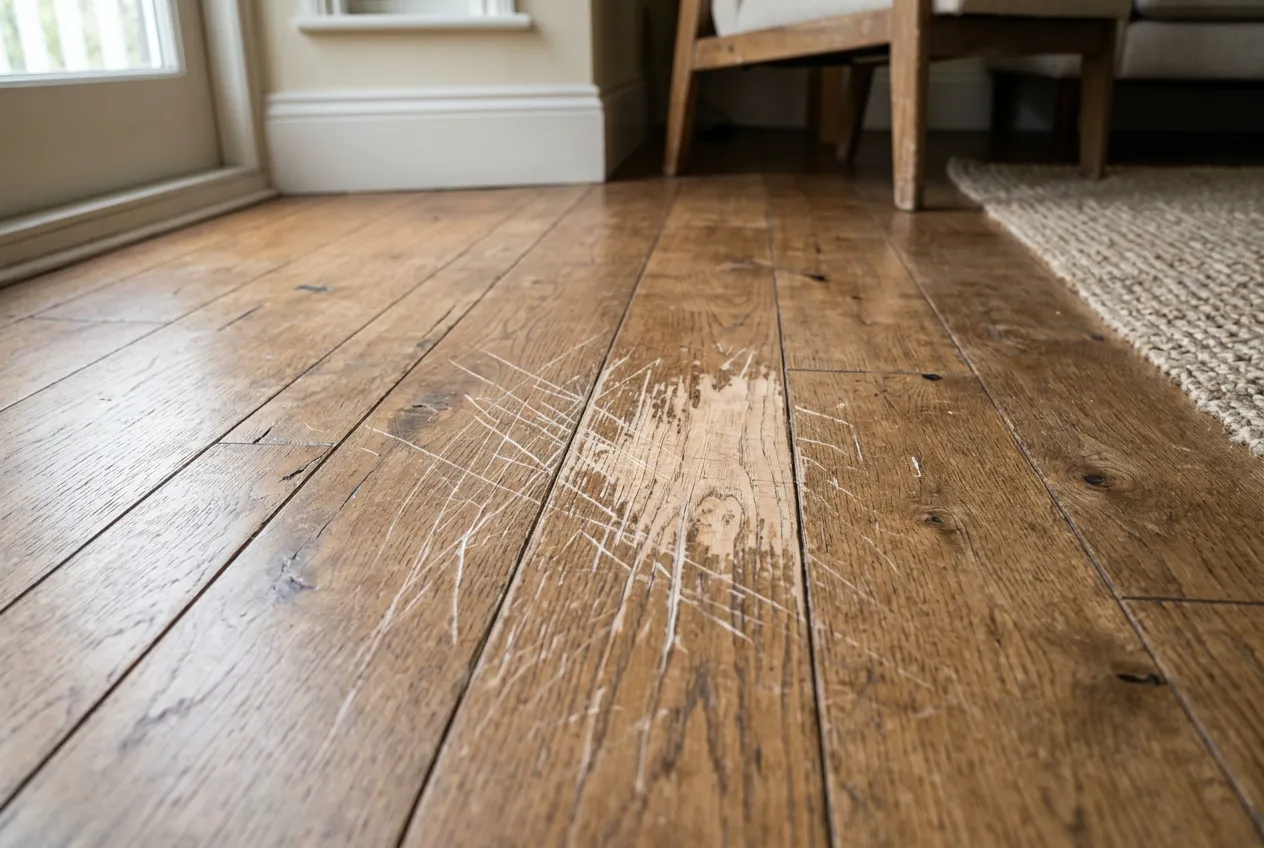
Run a fingernail slowly across the scratch. A finish-level scratch looks white or pale, sits in the clear coating on top of the wood, and your nail glides over it or barely catches. A wood-level scratch catches your nail properly: it has gone through the finish into raw wood, and it usually reads gray or dark because the exposed wood is picking up dirt and moisture. That one distinction decides almost everything about the repair.
Finish-level scratches: screen-and-recoat territory
When a whole floor is covered in fine white scratching, the general dulling a busy hallway or a dog’s daily commute produces, the wood underneath is fine. The fix is a screen and recoat: the old finish is lightly abraded (screened) and a fresh coat goes over it. No wood is removed, so it spends none of the floor’s limited sanding life, it’s done in a day or two, and the floor comes back uniform and protected. It is the single most cost-effective thing you can do for a tired-looking floor: provided the damage really is all in the finish. The catch: a recoat only works on a finish that is intact and clean. Floors that have been waxed or heavily polished over the years, common in older Baltimore rowhomes, can reject a new coat, so part of any honest recoat assessment is testing whether the new finish will actually bond.
Wood-level or widespread deep scratches: a full refinish
Once scratches have cut into the wood, or deep damage runs across large areas, a recoat would just seal the damage in under new gloss. The floor needs full refinishing: sanding down past the damage to fresh wood, then building the finish back up. That resets the entire surface, which is also the right move when scratches are only part of the story: gray traffic lanes, water marks, or dark spots from pets (those have their own page, because deep pet staining follows different rules).
Isolated deep scratches: touch-ups, with honest expectations
A single gouge-like scratch in an otherwise good floor can be touched up — filled, color-matched, and blended. From standing height a good touch-up disappears. Up close, in the right light, you will always be able to find it; anyone who tells you otherwise is selling. That trade-off is usually worth it for one bad scratch, and usually not worth repeating across a whole room. If the mark is pressed into the wood rather than dragged across it, that’s a dent — see the dent repair page for why those behave differently.
Keeping the next floor scratch-free-ish
Felt pads under every chair leg and a doormat that catches grit before it gets walked across the floor will prevent most of what you’re looking at now. That’s the whole lecture.
What it costs and how long it takes
A screen and recoat is a day or two including dry time. A full refinish runs several days, most of it finish curing rather than sanding. Individual touch-ups are quicker still. Where each option lands in dollars depends on the floor and the scope — the refinishing cost page breaks down what drives the price so you can see which bracket your floor sits in before anyone visits.
What this looks like
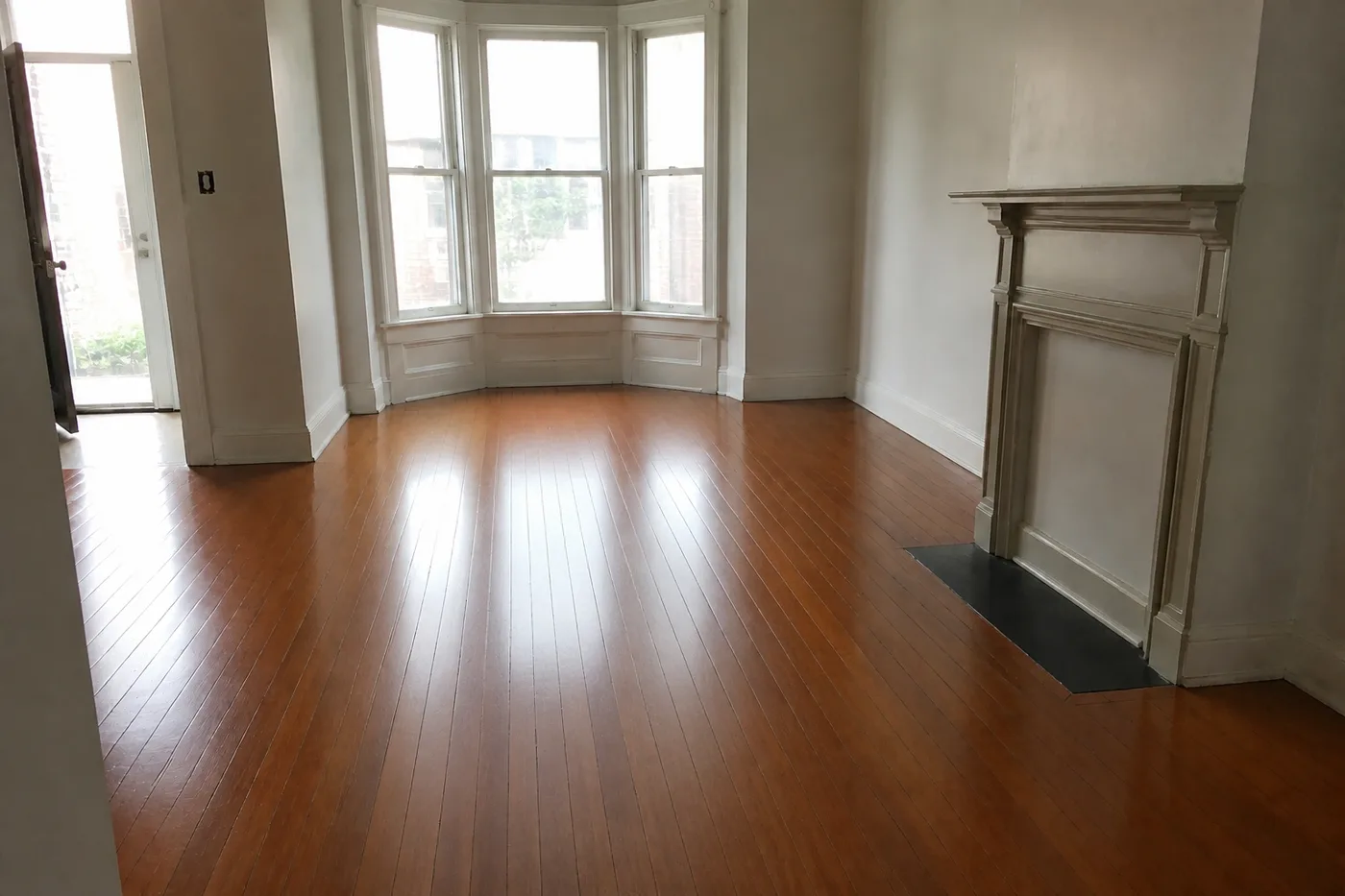
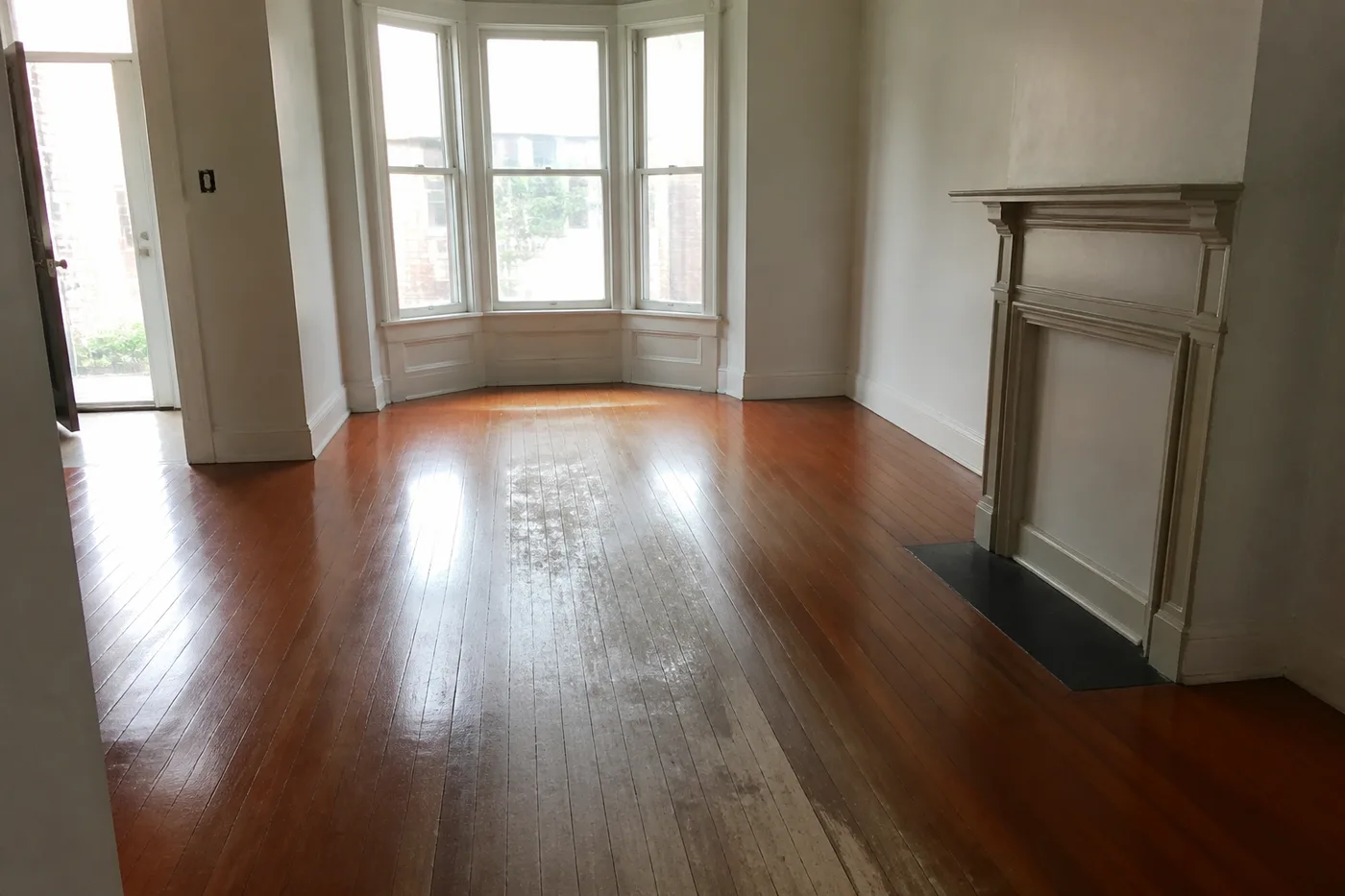
Rowhome front room with bay window
The finish was worn through along the traffic path but the wood underneath was sound, so this did not need a full sand. The floor was screened back and recoated in a day for a fraction of the cost. A floor only has so many full sandings in it, and using one up when a recoat will do is money wasted.
About these pictures: they illustrate what each type of job involves and the condition we start from — they are examples, not photographs of past customers’ homes. The descriptions of the work are exactly how we do it.
Did the fingernail test — now what?
Send photos of the worst areas, taken low across the floor in daylight. You’ll get an honest call on recoat vs. refinish, usually the same working day.
Floor covered in scratches?
Call — two minutes of questions usually settles whether you need a recoat or the full job.