
Water Damage Insurance Claims, BaltimoreClaiming water-damaged floors: document first, everything else second
Hardwood floor replacement is exactly the kind of cost a homeowners claim exists for: and the strength of that claim is mostly decided in the first day, by what you photograph before anything gets cleaned up. Here's the practical version, minus the legalese.
What policies typically cover: and typically don’t
Homeowners policies generally respond to sudden, accidental water events: a burst pipe, a failed washing-machine hose, a water heater letting go. They generally exclude gradual damage: the slow leak under a radiator fitting that stained the floor over months, or damage traceable to deferred maintenance. The same ruined floor can be covered or not depending entirely on how the water got there and how fast. Every policy draws these lines differently, so check yours and talk to your insurer early: nothing on this page is legal or coverage advice, and nobody can promise you coverage from outside your policy.
The order of operations when you find the water
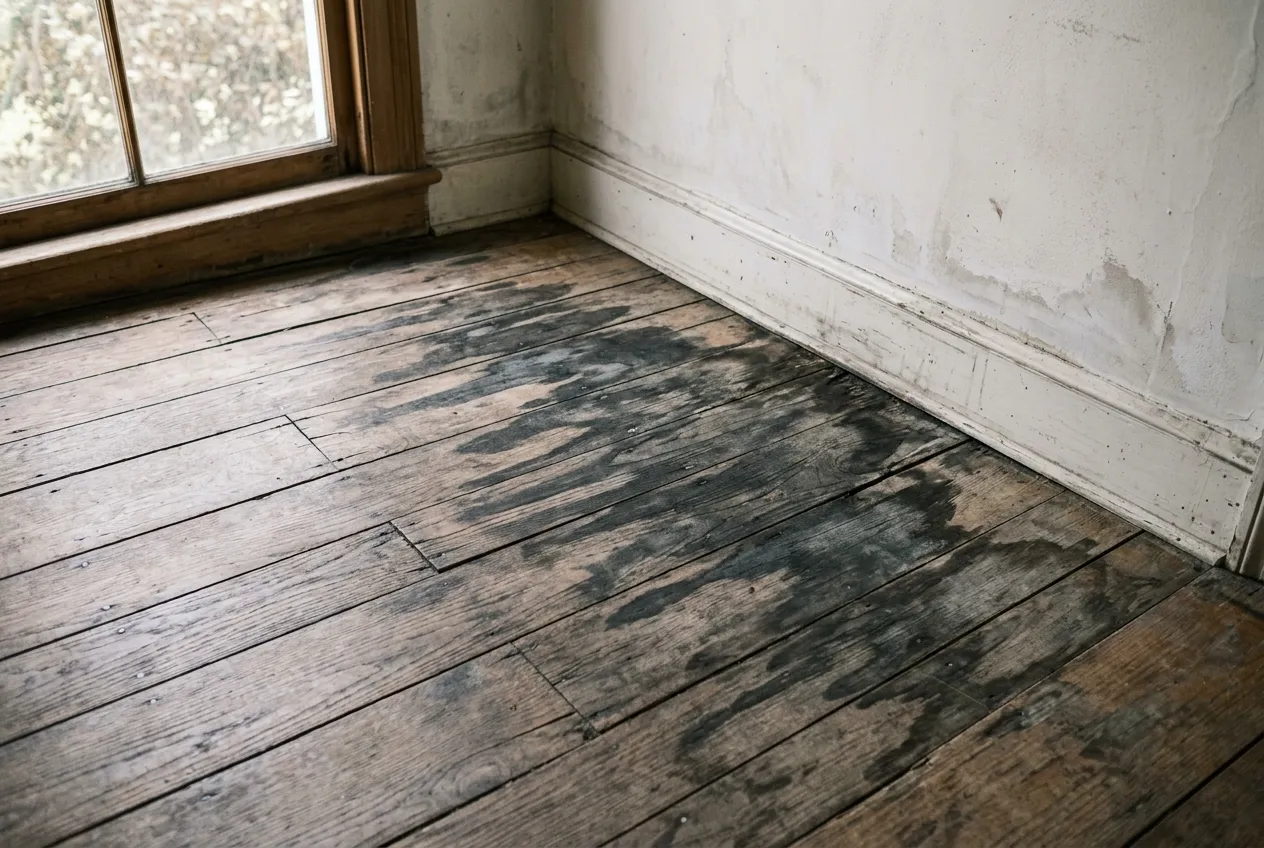
- Photograph before you clean up: where it’s safe to. Get the source (the burst pipe, the failed appliance), the standing water, and every affected board, wide shots and close-ups. Once the floor is mopped and drying, that evidence is gone for good.
- Note the date and time you discovered it, and when the event likely happened. Suddenness is the heart of the claim, and a clear timeline supports it.
- Then start drying immediately. Policies typically expect you to mitigate, to stop the damage getting worse, so fans and a dehumidifier are not jumping the gun, they’re usually part of your side of the bargain. The water damage page covers the first-48-hours steps in detail.
- Keep what comes out of the floor. If boards are removed during drying or repair, hold onto them. A stained, warped board is physical evidence of what happened; a dumpster is not.
- Get a written repair scope. A proper assessment that maps which boards are salvageable, which need replacing, and whether the subfloor was reached gives the claim a concrete, itemized basis instead of a guess.
What adjusters actually look at
Four things, mostly: the source of the water, the suddenness of the event, the extent of the damage, and your mitigation effort: whether you acted promptly to limit it. Your photos answer the first three; your fans-and-dehumidifier receipts and timeline answer the fourth. Severity matters too, and it helps to name it precisely: boards that have lifted clean off the subfloor, buckling, are a materially bigger repair than surface staining, and a scope document that says so reads very differently to one that just says “water damage.”
Where the repair estimate fits in
Adjusters work from documentation, and a floor professional’s written scope, board counts, affected area, subfloor condition, whether the fix is drying, sanding, or replacement — is the document that turns your photos into a number. How that scoping works, and what drives repair pricing generally, is laid out on the repair cost page. In Baltimore rowhomes there’s often a wrinkle worth flagging in the scope: original strip flooring can be hard to match, which sometimes makes refinishing a whole room the sensible way to blend a partial replacement — a legitimate scope point your documentation should make explicitly rather than leave for the adjuster to wonder about.
Timeline: move fast early, then be patient
The urgent part is the first day or two — photographs, notification, drying. After that, claims run at their own pace: an adjuster visit, a scope review, sometimes a follow-up. The floor itself should be fully dry before final repair decisions are made anyway, so the claim’s pace and the wood’s pace usually line up better than you’d expect. If you want the assessment and written scope handled while the drying runs, get in touch — photos are enough to start.
Need a written scope for your claim?
Send the photos you took — source, standing water, affected boards. You’ll get an assessment and an itemized repair scope you can hand straight to your adjuster.
Adjuster coming and floor still wet?
Call — get the documentation steps over the phone before anything else gets moved.