
Pet Stain Repair in BaltimorePet stains on hardwood: what sands out, and what honestly won't
Every home with a pet eventually has an accident on the floor — a senior dog, a new puppy, a cat with opinions. No judgment here. What matters is what the stain has done to the wood, because that decides whether it can be sanded away or needs the boards replaced.
Why pet urine is harder on wood than plain water
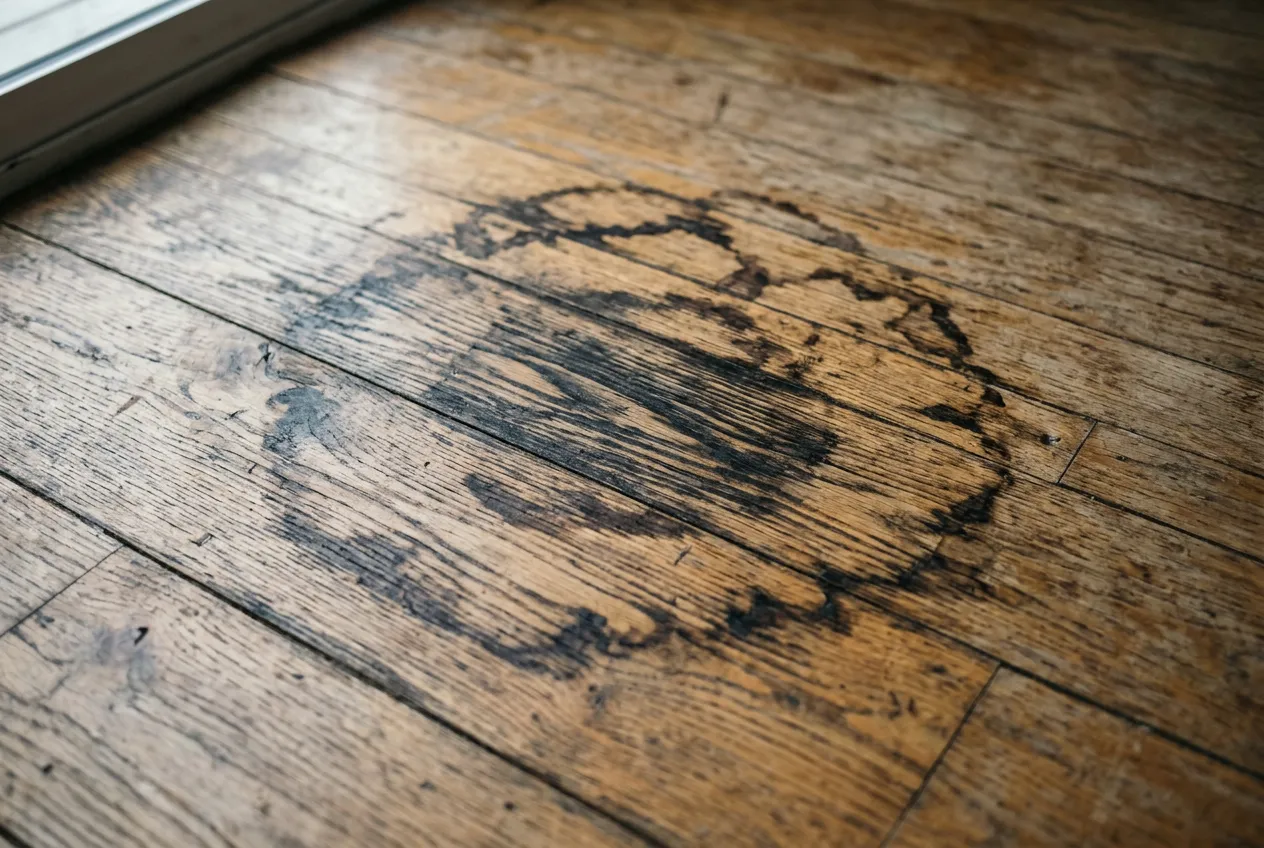
When urine sits on a floor, it works down through the finish and into the wood itself. There it reacts with the wood’s natural tannins and darkens over time — which is why an old accident shows up as a gray, brown, or black patch, often with a pale ring where the finish was etched around it. The color is not sitting on the wood the way a fresh spill does; it has become part of the wood, sometimes most of the way through the board. Plain water damage behaves differently and has its own page.
The honest rule: dark means deep
Black or dark brown staining usually will not sand out. Sanding removes the top layer of the wood, but a stain that has soaked deep keeps reappearing as you go down — and a floor only has so much thickness to give before you hit the tongue-and-groove. Chasing a deep stain with a sander spends the floor’s remaining life and still leaves a shadow. The realistic fix for deep staining is replacing the affected boards: the stained boards come out, new wood is laced into the surrounding floor, and the area is sanded and finished to blend.
Surface discoloration caught early sometimes does sand out. A recent accident that was cleaned up quickly may only have marked the finish and the top of the wood. Those lighter marks can disappear entirely during a refinish. The dividing line is depth, and a moisture meter plus a small test spot settles it — guessing from color alone gets it wrong in both directions.
The smell test — literally
If an odor fades in winter and returns on humid Baltimore summer days, that is telling you something specific: the urine salts are still in the wood, or below it in the subfloor, and moisture in the air is reactivating them. No amount of surface cleaning or recoating fixes that, because the source is underneath the surface. Persistent returning odor almost always means the affected boards come up — and occasionally a section of subfloor gets sealed or replaced while they’re out. It sounds drastic; it is also the only version of the fix that actually ends it.
What the repair looks like, start to finish
First, an assessment maps how many boards are affected and how deep — stains along a wall in a rowhome often follow one board run and are more contained than they look. Board replacement itself is quick; the new wood is then sanded level with the old floor. If the stains are scattered across a room, it usually makes sense to refinish the whole floor after the repairs rather than spot-finish each patch, so the room reads as one continuous surface instead of a patchwork. Marks that are scratched rather than stained — claw marks from the same culprit — are covered on the scratch repair page. For a sense of how board replacement work is scoped and priced, see the repair cost page.
Timeline-wise, a contained repair with blending is typically a few days including finish drying; a repair plus full refinish runs about a week end to end, most of that cure time rather than labor.
What this looks like
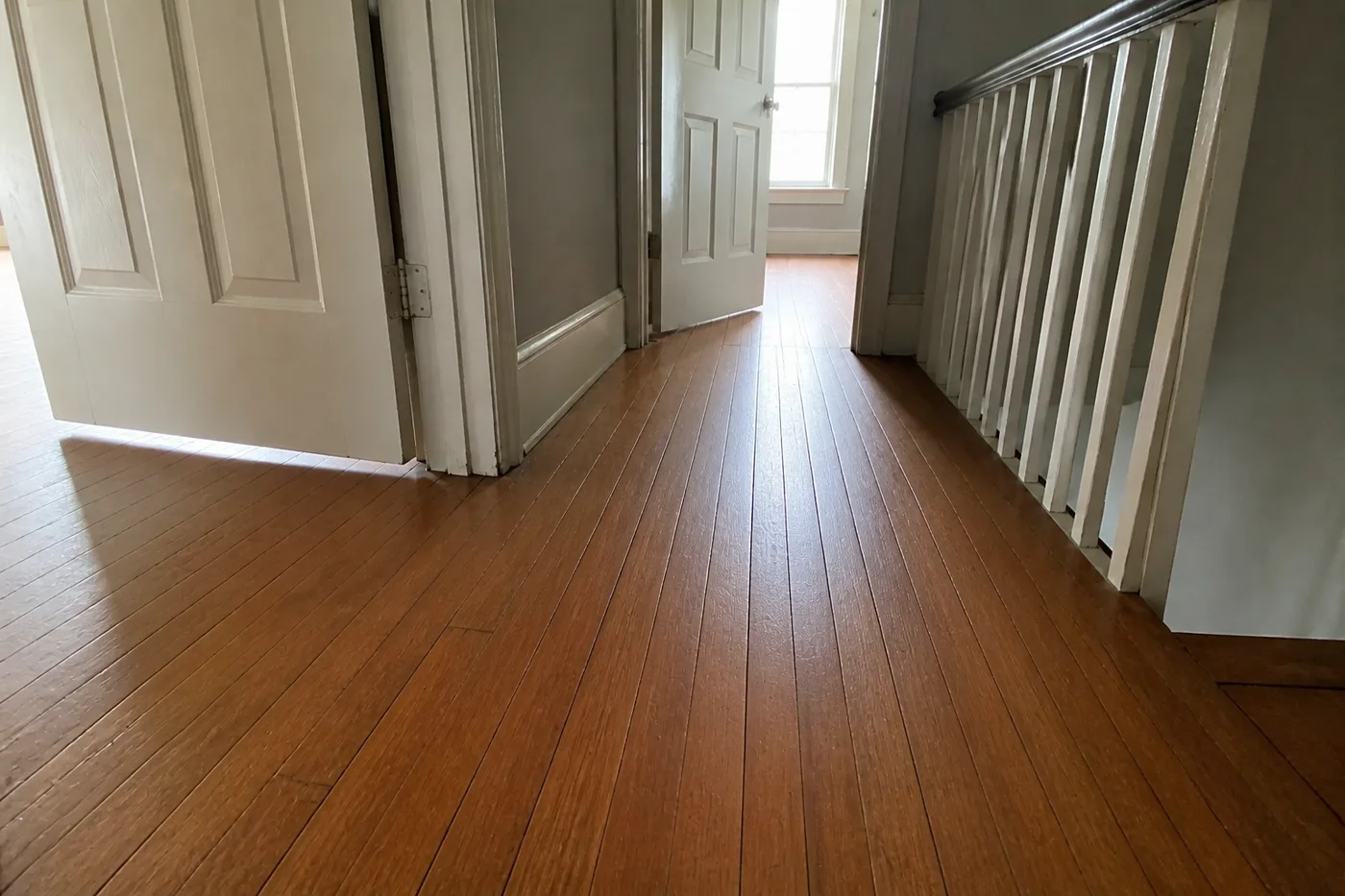
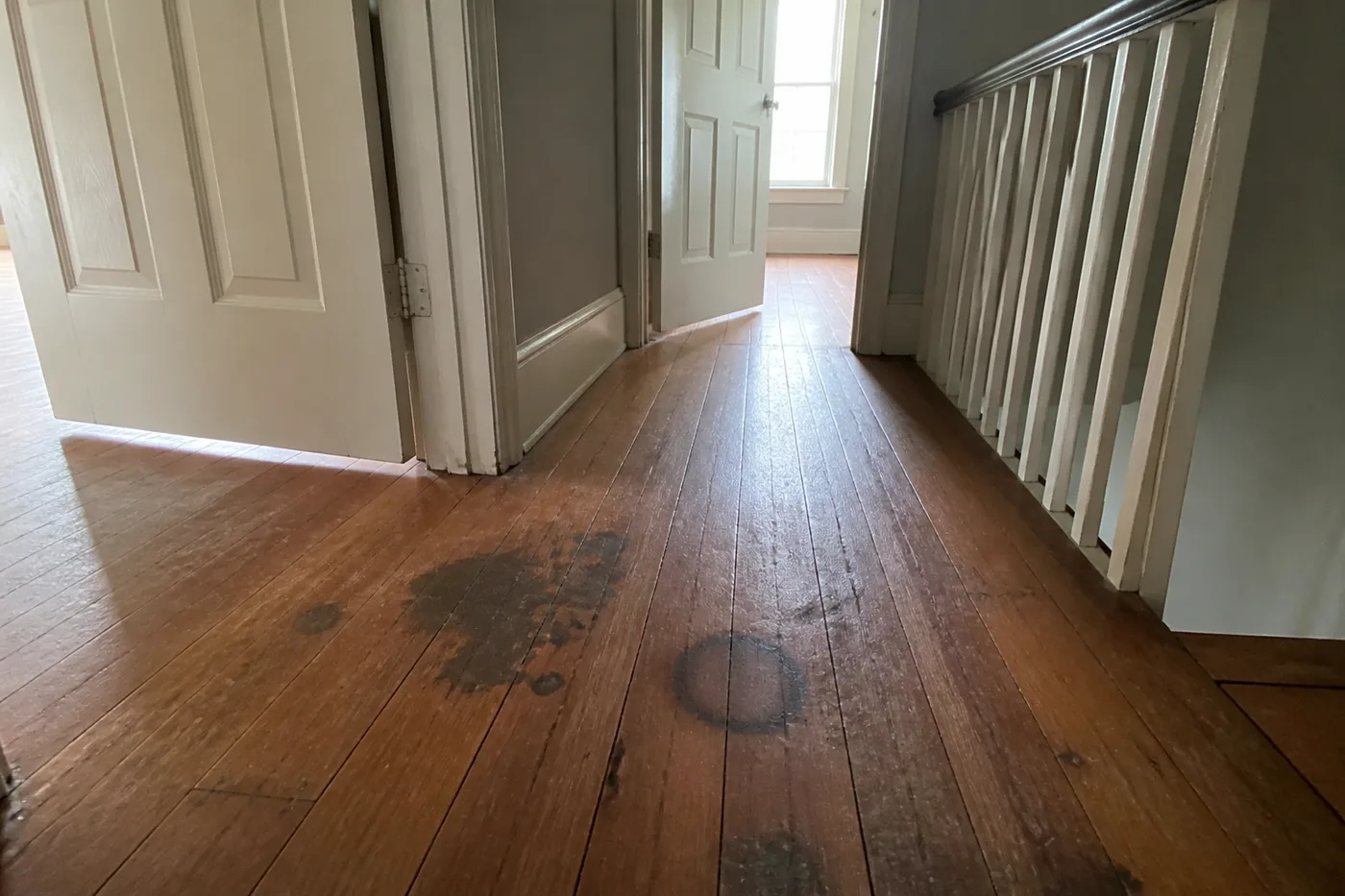
Upstairs landing outside two bedrooms
The staining had gone through the finish and into the wood, so sanding will not remove it. The affected boards were replaced and laced into the surrounding courses, then the whole landing refinished in Early American so the new wood disappears into the old rather than sitting there as a patch.
About these pictures: they illustrate what each type of job involves and the condition we start from — they are examples, not photographs of past customers’ homes. The descriptions of the work are exactly how we do it.
Wondering if yours will sand out?
Send a photo of the stain in daylight. Dark-and-deep vs. light-and-recent is usually readable from a picture, and you’ll get a straight answer either way.
Stains you've been hiding under a rug?
Call — find out whether it's a sand-out or a board swap before you plan anything else.