
Dent & Gouge Repair in BaltimoreDented floor? First, an honest question: does it actually need fixing?
A dropped cast-iron pot, a piano foot, a stiletto heel: hardwood remembers all of them. Some dents are worth repairing, some are worth living with, and knowing which is which saves you from paying for work that won't improve the floor.
Dents and gouges are different injuries
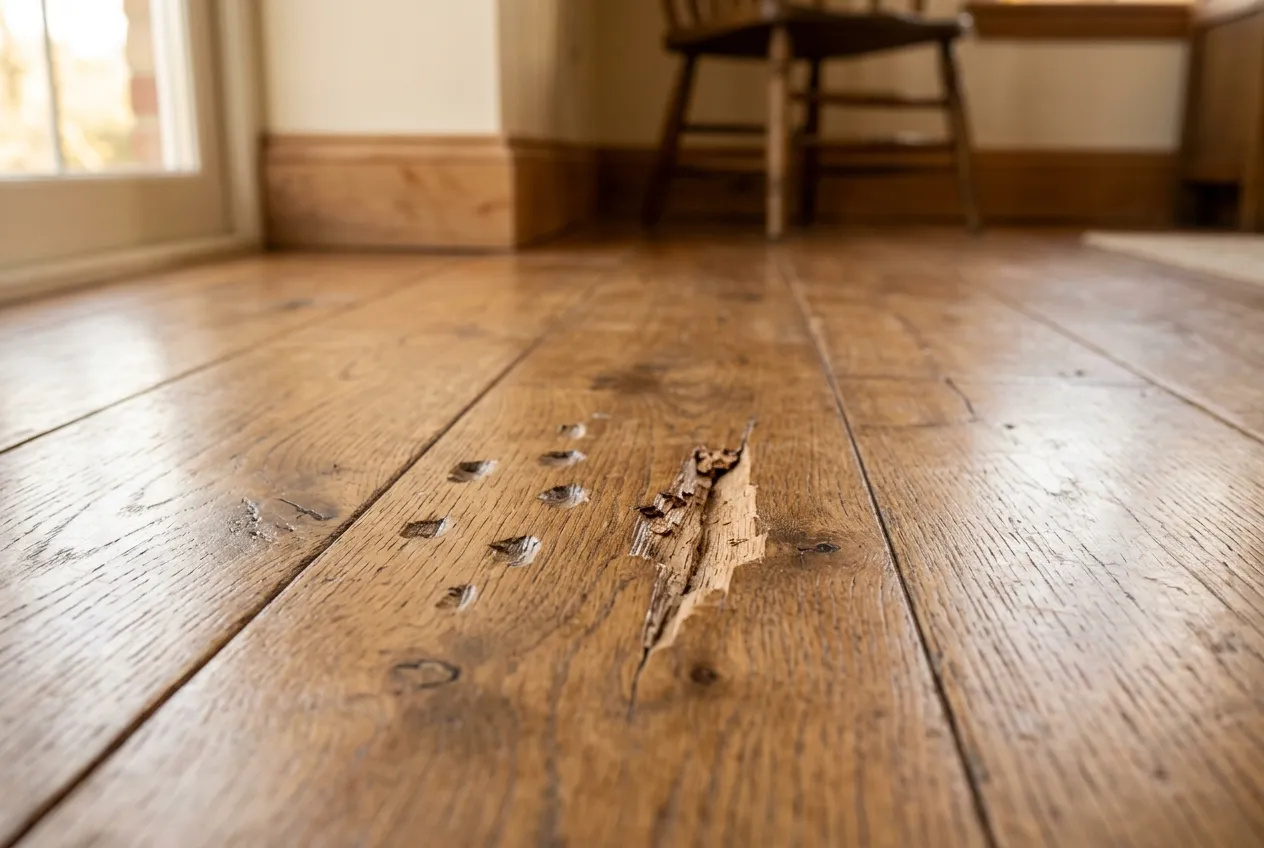
A dent is compression: the wood fibers are still there, crushed downward into the board. A gouge is loss: something dug in and carried wood away, leaving a hollow with torn fibers around it. The distinction matters because a dent can sometimes be persuaded to come back up, while a gouge can only be filled or cut out. If what you’re looking at is a line rather than a crater, a mark that drags across the surface, that’s a scratch, and the scratch repair page covers those.
The options, honestly ranked
Sometimes the best repair is none. A few small, scattered dents in a floor that is otherwise sound are character, not damage: especially in the old heart pine you find in many Baltimore rowhomes, which is soft enough that a century of life has already left its marks. Chasing every one of them costs money and finish life for a result you will stop noticing in a week.
Steam can partially raise a dent: but only on the right floor. Moisture and heat swell crushed fibers back toward their original shape. It works on bare wood and reasonably well on oiled floors. Under a modern polyurethane finish it rarely does much, because the finish blocks the moisture from reaching the wood: and forcing it risks whitening or blistering the finish around the dent. Anyone promising to steam dents out of a sealed floor is overselling.
Filler is for gouges. Where wood is missing, a color-matched filler brings the surface level. Done carefully it blends well from standing height; it never fully disappears up close, and it does not move with the wood the way wood does.
Sanding removes shallow damage — and it is a budget you spend. A full sanding takes the surface down past shallow dents and gouges and gives you a genuinely new face on the floor. But a board only has so much wood above the tongue, which means a floor gets a limited number of sandings in its life. Deep dents outlast what a sanding can reach, and grinding down far enough to chase them wastes thickness the floor will want later.
Deep or widespread damage means board replacement. A crater that goes well below the surface, a cluster of damage in a traffic lane, or gouging across many boards is board replacement territory: the damaged boards come out, new wood is laced in, and the area is sanded and finished to match.
What to expect, and how long it takes
Isolated repairs — a few boards replaced, gouges filled — are typically a short visit plus finish drying time. A full sand and refinish runs in days, most of it finish cure rather than labor. The honest sequence is: assess whether the damage bothers you from standing height, fix the source (felt pads under the furniture that did it), and then size the repair to the damage rather than the other way around. If you want a rough sense of what different scopes of work look like before talking to anyone, the cost calculator is built for exactly that.
Get a straight answer first
Photograph the worst dent next to a coin for scale and send it through. You’ll hear back whether it’s a live-with-it, a fill, or a board swap — before anyone quotes anything.
Dents you can't stop seeing?
Call — describe the damage and you'll know in minutes whether it's worth fixing.